Curriculum
Mato Grosso do Sul
Mato Grosso do Sul: Discover the Charm of Brazil's Midwest
0/21
-
Welcome to Mato Grosso do Sul by Bruno Wendling
 Preview
 -
INTRODUCTION
Preview
-
Lesson 1 - General Information
Preview
-
Lesson 2 - What to Know Before Travelling
Preview
-
Lesson 3 - Useful Information
Preview
-
Lesson 4 - A Brief History
Preview
-
Lesson 5 - Geography
Preview
-
Lesson 6 - Demography
Preview
-
Lesson 7 - Economy
Preview
-
Lesson 8 - Campo Grande: The Capital of Mato Grosso do Sul
Preview
-
Lesson 9 - Types of Tourism in Mato Grosso do Sul
Preview
-
Lesson 10 - Pantanal I
Preview
-
Lesson 11 - Pantanal II
Preview
-
Lesson 12 - Bonito
Preview
-
Lesson 13 - Other Points of Interest in Mato Grosso do Sul
Preview
-
Lesson 14 - Culture
Preview
-
Lesson 15 - Gastronomy
Preview
-
Lesson 16 - Accommodation
Preview
-
Lesson 17 - Shopping
Preview
-
Lesson 18 - Nightlife in Mato Grosso do Sul
Preview
-
Course Completion Quiz


Lesson 4 – A Brief History
The history of Mato Grosso do Sul is marked by a series of events that reflect the region’s cultural and geographical diversity. The story begins with the Indigenous peoples who inhabited the area thousands of years ago, such as the Guarani, Kayapó, and Xavante, leaving a significant cultural legacy and establishing a deep connection with the land.
Colonisation and Formation
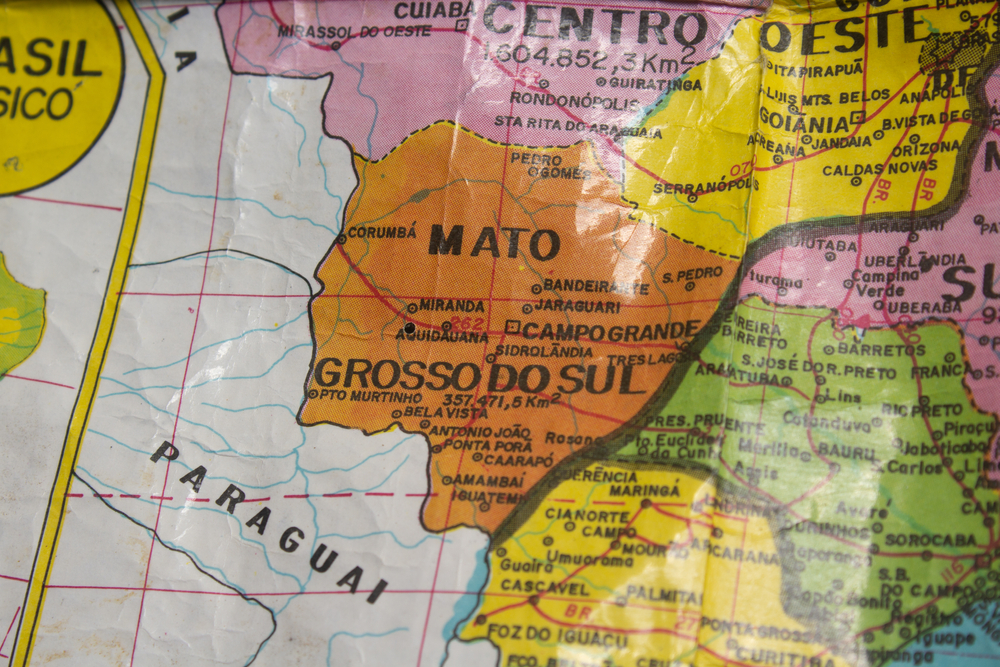
European colonisation of the region began in the 16th century with the arrival of the Portuguese. During this period, explorers and ‘bandeirantes’ (flag bearers and settlers), in search of wealth and trade routes, ventured into the interior of Brazil. In 1778, the territory that now makes up Mato Grosso do Sul was integrated into the Portuguese Empire under the name “Capitania de Mato Grosso,” which encompassed a vast area of Brazil’s Midwest.
Independence and State Creation
With Brazil’s independence in 1822, the Capitania de Mato Grosso became the Province of Mato Grosso. Throughout the 19th century, the region underwent various political and administrative transformations. In 1977, the State of Mato Grosso was divided into two, creating Mato Grosso do Sul, officially established as an independent state on 1 January 1979.
Development and Modernisation
From the 1980s onwards, Mato Grosso do Sul began to modernise and diversify its economy. The expansion of agriculture, particularly cattle ranching and soybean cultivation, drove economic growth. The discovery and development of ecotourism, especially in destinations like Bonito and the Pantanal, also contributed to the state’s popularity and economic significance.
Challenges and Future
Mato Grosso do Sul faces challenges related to sustainable development, environmental conservation, and the preservation of Indigenous culture. However, the state continues to grow and assert itself as an important economic and tourist hub in Brazil, with an increasing commitment to preserving its natural resources and promoting responsible tourism practices.
The history of Mato Grosso do Sul is a narrative of exploration, colonisation, development, and modernisation. With its deep roots in Indigenous heritage and a trajectory marked by adaptation and growth, the state plays a vital role in the regional and national landscape, offering a rich combination of culture, nature, and economic development.