Curriculum
Mato Grosso do Sul
Mato Grosso do Sul: Discover the Charm of Brazil's Midwest
0/21
-
Welcome to Mato Grosso do Sul by Bruno Wendling
 Preview
 -
INTRODUCTION
Preview
-
Lesson 1 - General Information
Preview
-
Lesson 2 - What to Know Before Travelling
Preview
-
Lesson 3 - Useful Information
Preview
-
Lesson 4 - A Brief History
Preview
-
Lesson 5 - Geography
Preview
-
Lesson 6 - Demography
Preview
-
Lesson 7 - Economy
Preview
-
Lesson 8 - Campo Grande: The Capital of Mato Grosso do Sul
Preview
-
Lesson 9 - Types of Tourism in Mato Grosso do Sul
Preview
-
Lesson 10 - Pantanal I
Preview
-
Lesson 11 - Pantanal II
Preview
-
Lesson 12 - Bonito
Preview
-
Lesson 13 - Other Points of Interest in Mato Grosso do Sul
Preview
-
Lesson 14 - Culture
Preview
-
Lesson 15 - Gastronomy
Preview
-
Lesson 16 - Accommodation
Preview
-
Lesson 17 - Shopping
Preview
-
Lesson 18 - Nightlife in Mato Grosso do Sul
Preview
-
Course Completion Quiz


Lesson 10 – Pantanal I
The Pantanal of Mato Grosso do Sul is one of the most impressive and vast regions in the world, offering a unique experience for nature and wildlife lovers. Spanning parts of the state of Mato Grosso and Bolivia as well, it covers approximately 64% of the state’s territory, extending over about 150,000 km² within it.
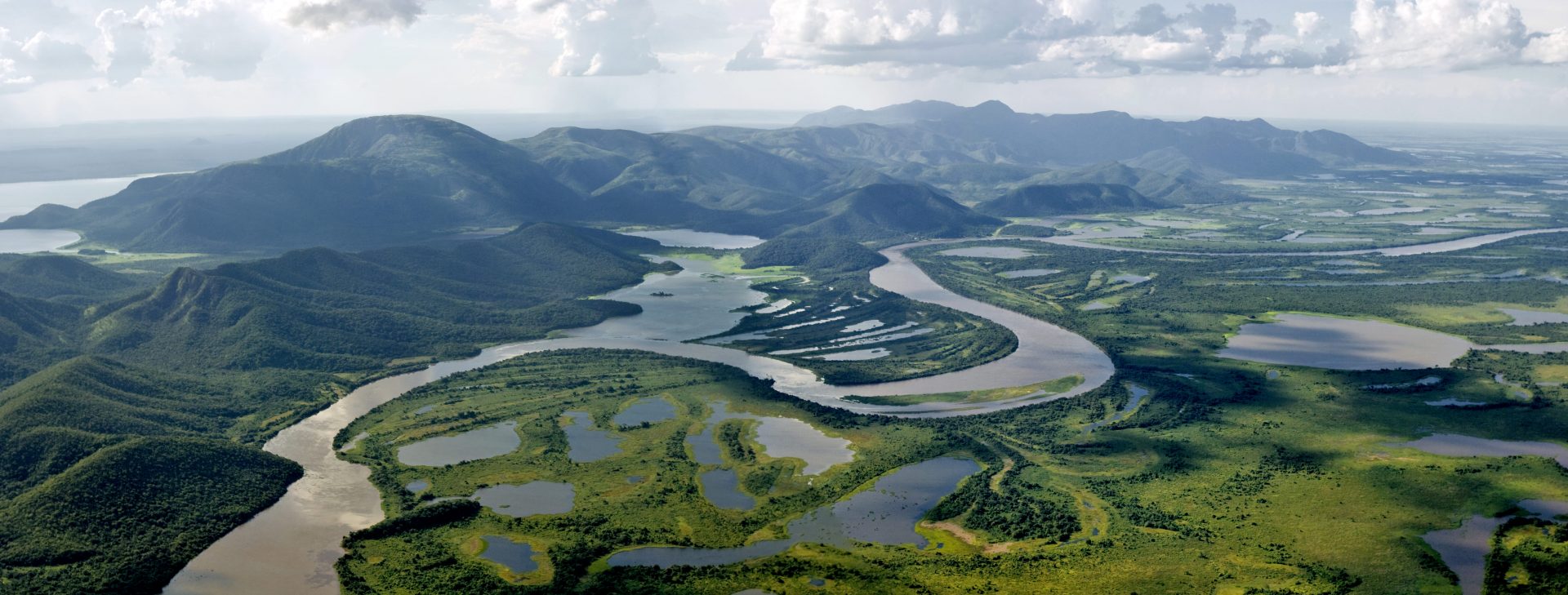 Photo: Haroldo Palo
It has been recognised as a UNESCO World Heritage Site since 2000, due to its ecological importance and unparalleled biodiversity. The designation as a World Heritage Site highlights the need for conservation and protection of this crucial habitat, which plays a fundamental role in the global environmental balance and is essential for preserving biodiversity. Inclusion on the UNESCO list also helps to raise awareness of the importance of sustainability and conservation, attracting tourists eager to experience and learn about this extraordinary natural environment.
Hydrology
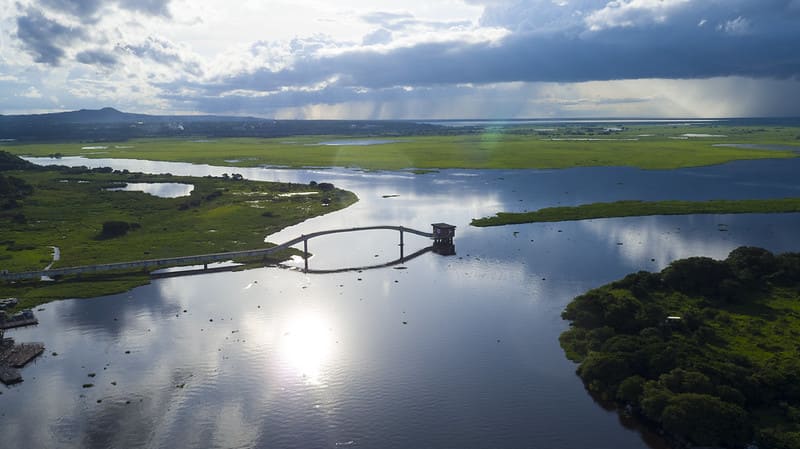
Paraguay River. Photo: Flávio André/MTur
The hydrology of the Pantanal is dominated by an intricate network of rivers, streams, and lagoons that play a vital role in maintaining the ecosystem. The Paraguay River is the main watercourse that runs through the Pantanal, receiving water from various tributary rivers and distributing it across the plain. During the rainy season, these rivers fill up and flood extensive areas, while in the dry season, water concentrates in lagoons and channels, which are crucial for the survival of local wildlife.
Rainfall
Rainfall is highly variable, with an average annual precipitation ranging from 1,200 to 1,800 millimetres. The region experiences a rainy season from November to March, when heavy rains contribute to the flooding of the plains. In the dry season, which runs from May to September, precipitation decreases significantly, and the accumulated water in flooded areas is a vital resource for local flora and fauna.
Topography
The topography is predominantly flat, with altitudes rarely exceeding 200 metres above sea level. The area is characterised by a relatively uniform surface, with minor elevations and depressions that influence the dispersal of water during the rainy season. This flat topography is fundamental to the flooding and drainage processes that shape the Pantanal ecosystem.
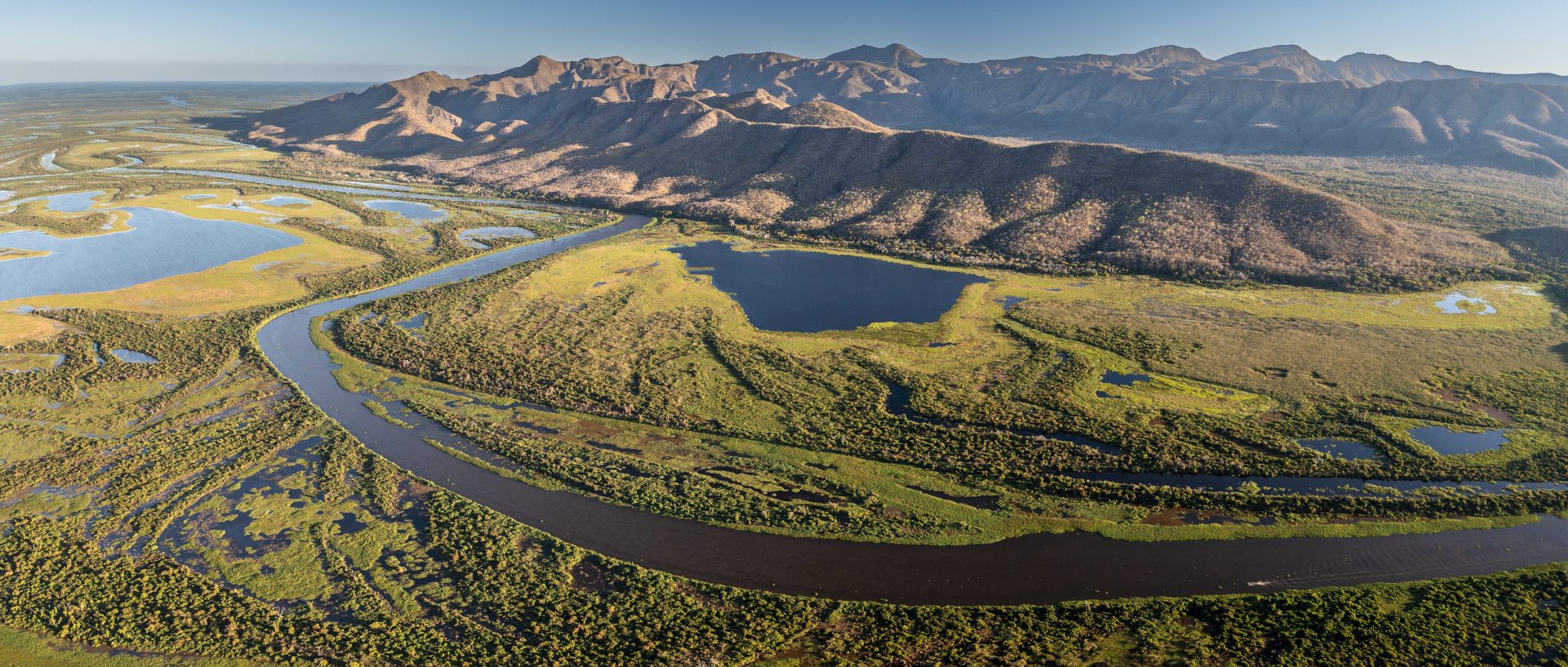 Photo: André Dib
Wildlife
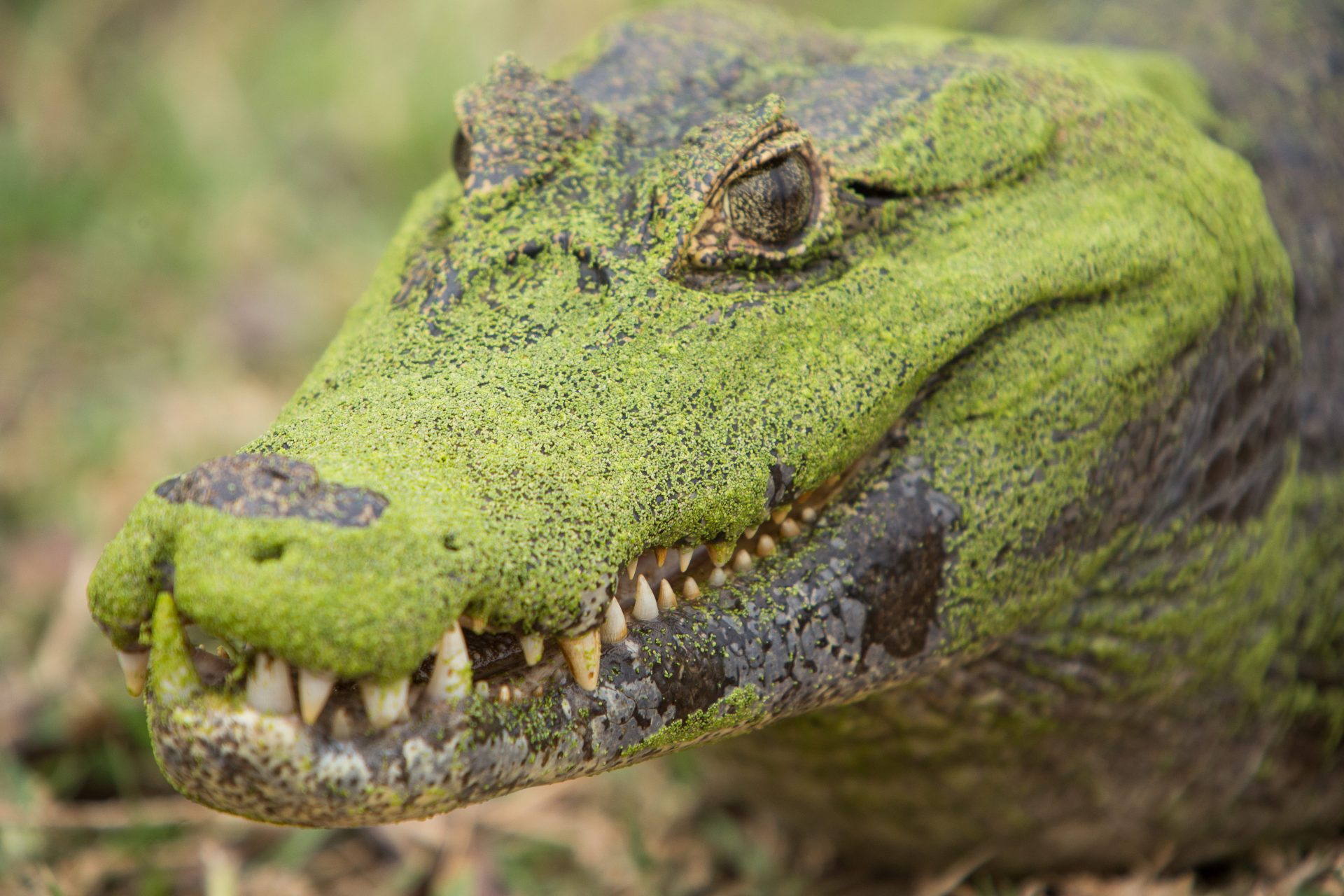 Alligator. Photo: @visitmsoficial
The Pantanal is renowned for its rich and diverse fauna, which includes some of the largest concentrations of wildlife in Brazil. Among the emblematic animals of the region are the jaguar, capybara, Pantanal caiman, and a vast array of birds, such as macaws and jabirus.
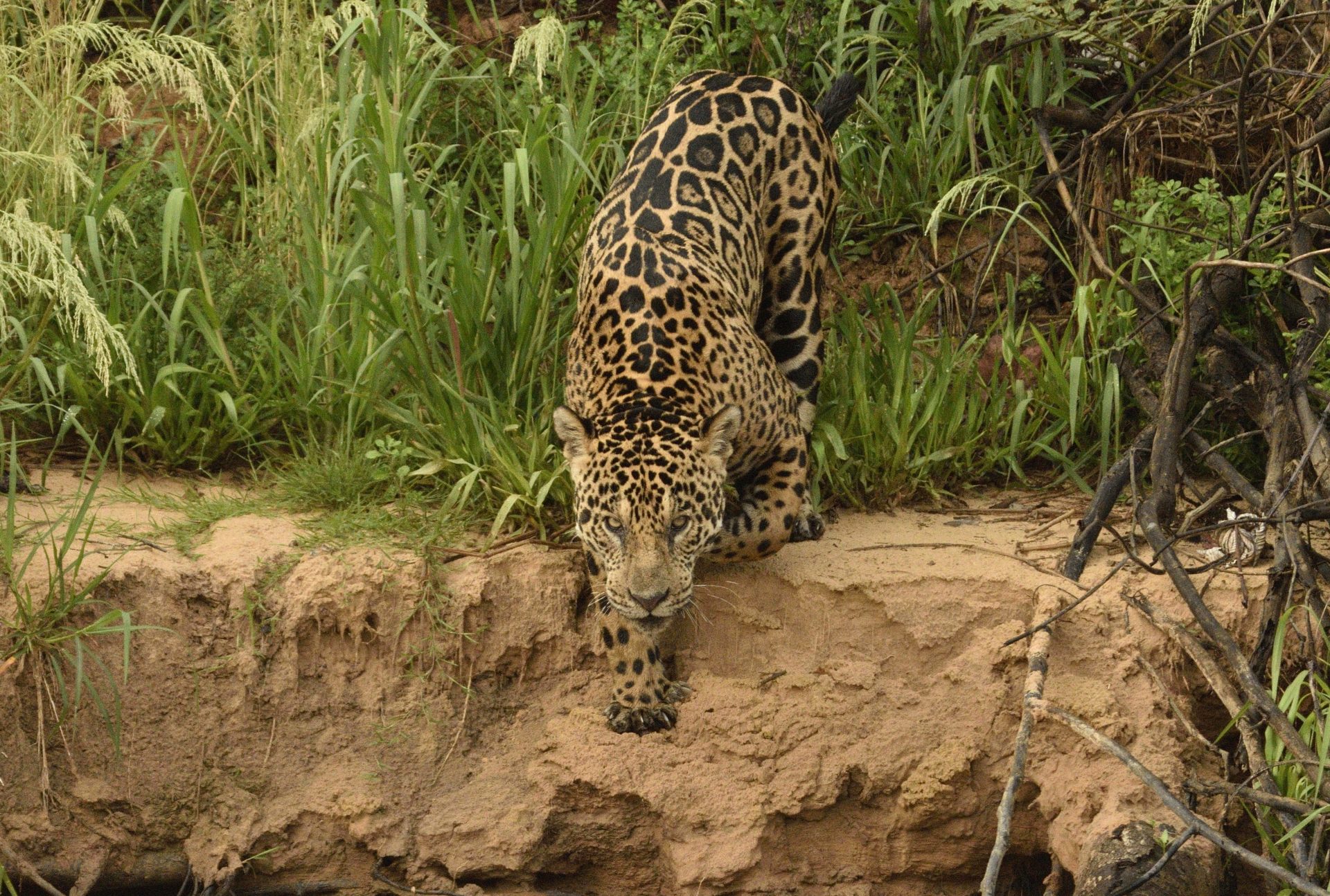 Jaguar
The diversity of habitats, ranging from flooded areas to forests and savannas, provides an ideal environment for different species and contributes to the ecological significance of the region.
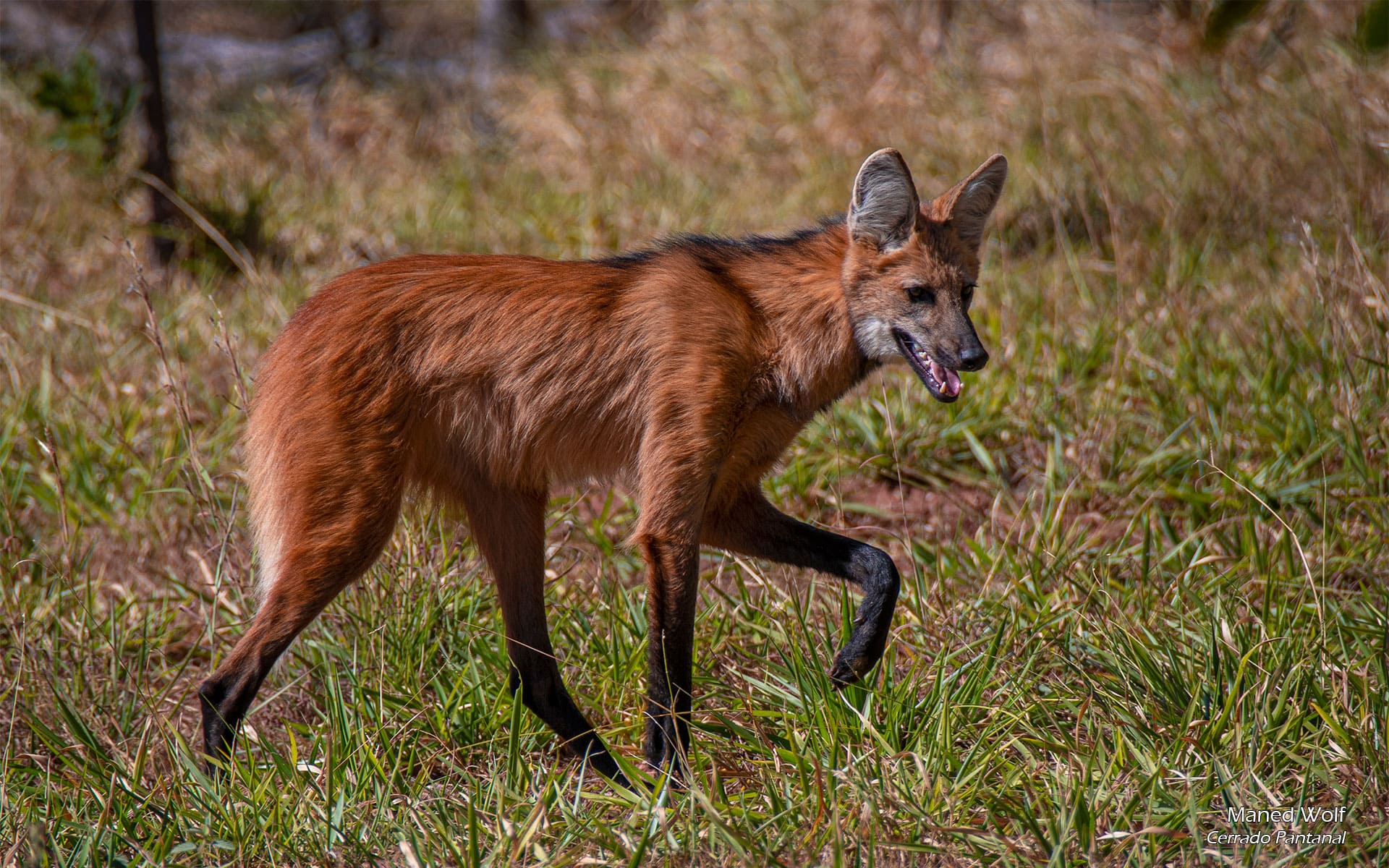 Maned wolf
Flora
The flora is equally diverse and adapted to the varying conditions of flooding and drought. Vegetation includes extensive grasslands, such as Argentine grass, as well as shrubs and trees that withstand seasonal changes.
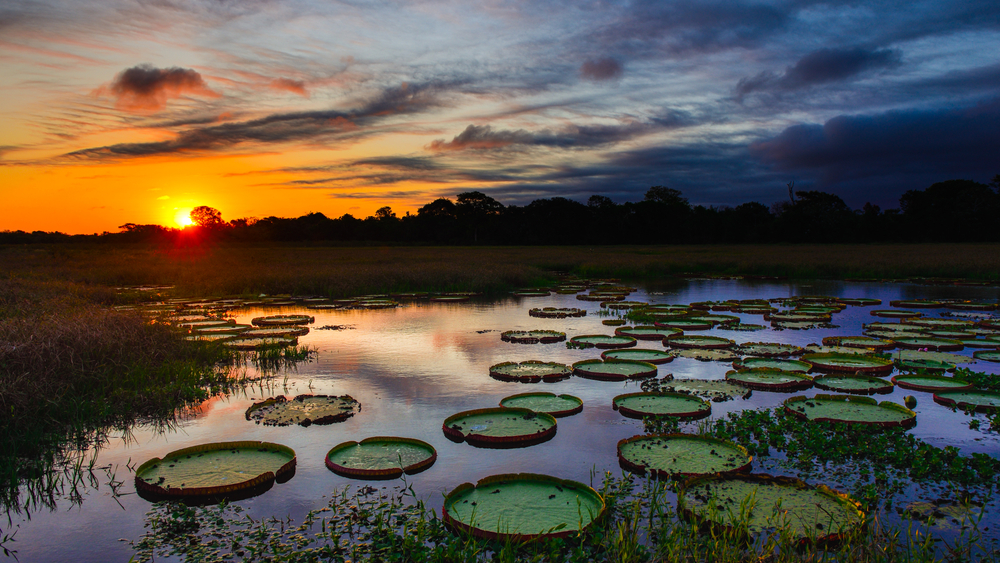
Aquatic plant species, such as the water lily and giant water lily, are common in flooded areas. The vegetation is crucial for soil stability and provides food and shelter for local wildlife.
Human Presence
Human presence is relatively concentrated in specific areas, such as towns and villages near urban centres. Human activity in the region is primarily focused on agriculture and livestock farming, which are the main economic activities.
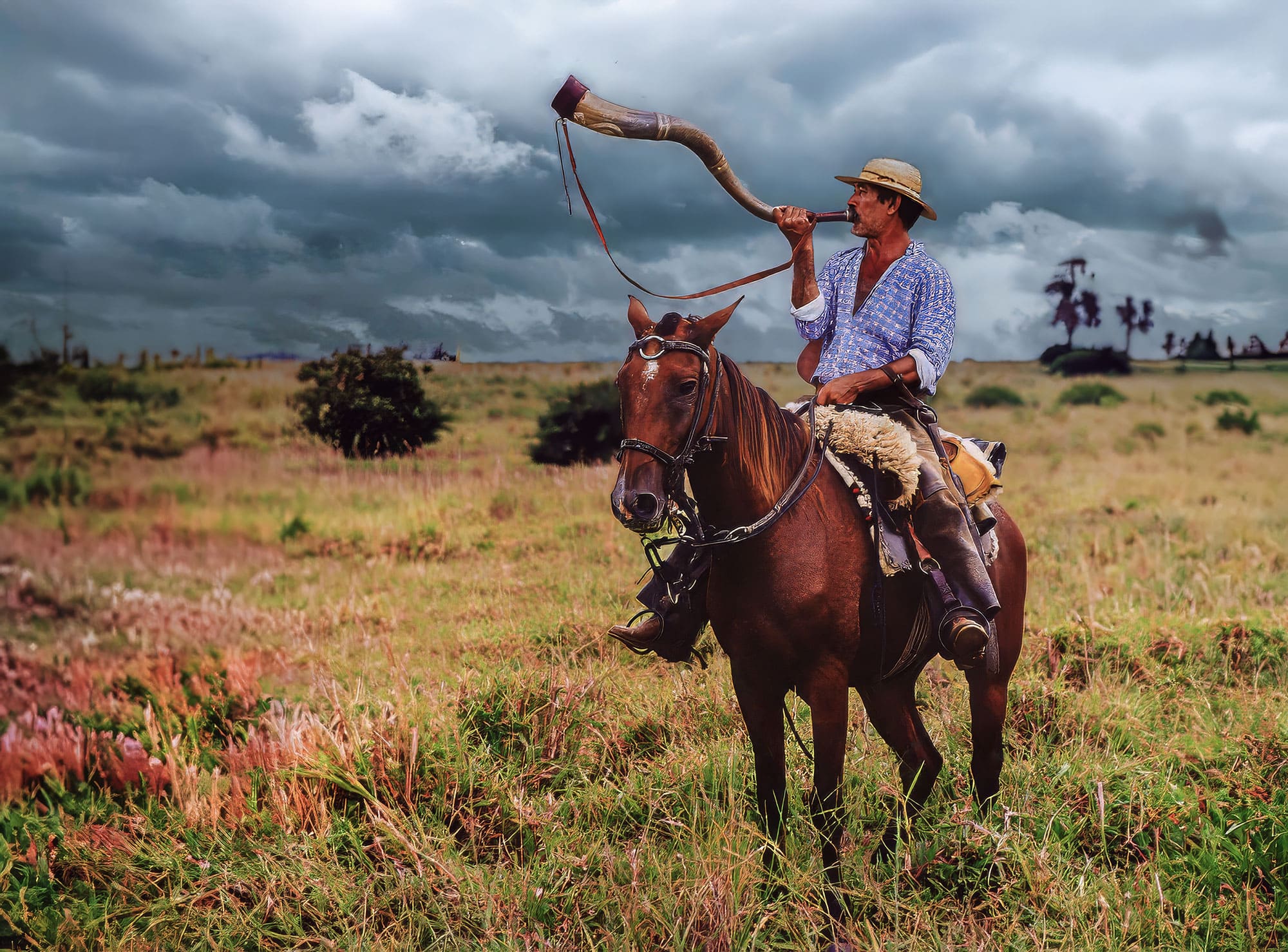
However, human presence also includes tourism, which has grown due to interest in ecotourism and wildlife observation.
Hydroelectric Plants
The presence of hydroelectric plants is limited, but there are projects and ventures that could impact the region. The construction of hydroelectric facilities in adjacent areas may affect river flows and the dynamics of flooding in the Pantanal. It is important to monitor and manage these impacts to protect the delicate ecological balance of the region and ensure the sustainability of natural resources.